What Size Grinder Plate for Snack Sticks: Buyer's Guide

Affiliate disclosure: Some links on this page are affiliate links. If you buy through them we earn a small commission at no extra cost to you. Recommendations are research-driven; we don't claim personal use of every product reviewed. Product prices and availability are accurate as of the date published and are subject to change. Always check Amazon for current pricing before purchasing. Learn more.
Quick Picks
Grinder Plate for #8 Grinders, Fits Most #8 Size Grinders, with 1/4" Holes, Ideal for Regular Chili, Ground Meat, Beef,
1/4" hole size ideal for regular chili and ground meat applications
Buy on AmazonONTUBE Ceramic Grater Plate for Ginger, Garlic, Onion (5.5" x 2 Pieces)
Ceramic material resists rust and staining from ginger, garlic, onion
Buy on Amazon#12 Stainless Steel Meat Grinder Plate Discs Blades(6/25 Hole Plate)
Stainless steel construction offers corrosion resistance and durability
Buy on Amazon| Product | Price Range | Top Strength | Key Weakness | Buy |
|---|---|---|---|---|
| Grinder Plate for #8 Grinders, Fits Most #8 Size Grinders, with 1/4" Holes, Ideal for Regular Chili, Ground Meat, Beef, best overall | $$ | 1/4" hole size ideal for regular chili and ground meat applications | Limited to #8 grinder size; incompatible with other grinder models | Buy on Amazon |
| ONTUBE Ceramic Grater Plate for Ginger, Garlic, Onion (5.5" x 2 Pieces) also consider | $$ | Ceramic material resists rust and staining from ginger, garlic, onion | Manual grating requires hand effort versus motorized meat grinder | Buy on Amazon |
| #12 Stainless Steel Meat Grinder Plate Discs Blades(6/25 Hole Plate) also consider | $$ | Stainless steel construction offers corrosion resistance and durability | Replacement plates require compatible grinder model for proper installation | Buy on Amazon |
| #8 Stainless Steel Meat Grinder Plate Discs Blades (5/8 Hole Plate) also consider | $$ | Stainless steel construction resists corrosion and rust | Replacement plate discs require compatible grinder unit | Buy on Amazon |
| Together-life 7 Piece Stainless Steel Meat Grinder Plates & Blades for Food Chopper & Meat Grinder also consider | $$ | Seven-piece set provides multiple grinding plate options for different textures | Unknown brand may lack established reputation in meat grinding category | Buy on Amazon |
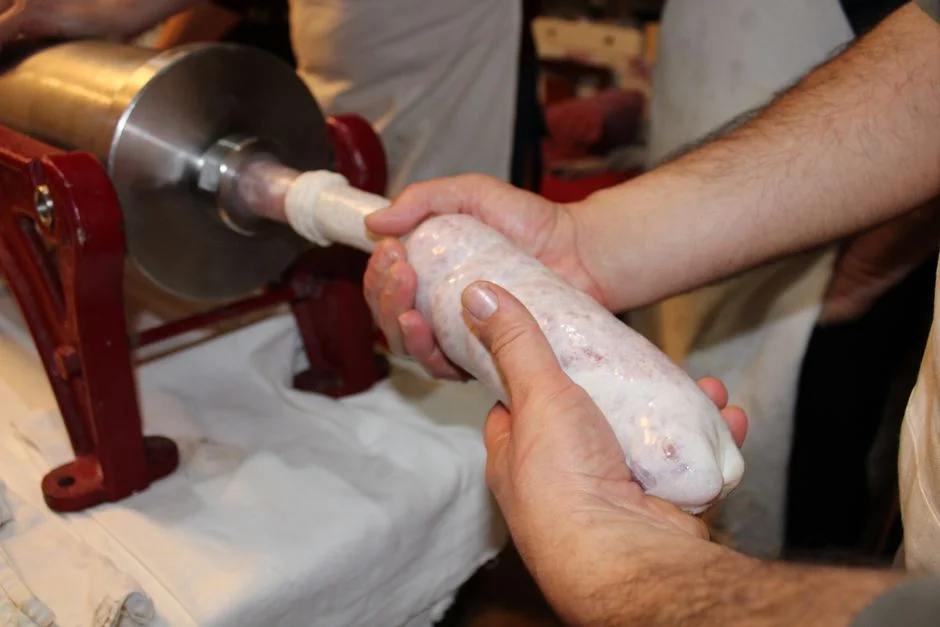
Snack sticks demand a specific grind , too coarse and the texture falls apart, too fine and you lose the snap that makes them worth the effort. The plate you choose is the single biggest variable in that outcome, and for Meat Grinders used in snack stick production, the right hole size and material make a measurable difference in finished texture and casing fill.
Most buyers searching this topic already have a grinder and need a replacement or upgrade plate. That narrows the question considerably: you need the correct grinder size compatibility, the right hole diameter for your recipe, and material that holds up to repeated use without corroding. What follows addresses each of those factors before naming specific plates.
What to Look For in Grinder Plates for Snack Sticks
Hole Diameter and Snack Stick Texture
Hole diameter is the primary driver of grind texture, and snack sticks have specific requirements. Most recipes specify a fine grind , typically in the 3/16” to 1/4” range , to produce the dense, cohesive texture that holds in a small-diameter casing and delivers the characteristic snap. A coarser plate pushes more fat through intact rather than emulsified into the mix, which can cause separation during smoking or cooking.
Owner reports across r/meatcuring and r/charcuterie consistently point to a double-grind method for snack sticks: first pass through a 3/8” or 1/4” plate, second pass through a 3/16” plate. This produces the fine, consistent texture commercial snack sticks achieve. If you only have one plate, a 1/4” plate handles both a coarse first pass and an acceptable single-grind result for most home batches.
Grinder Size Compatibility
Plates are not universal. They are manufactured to fit specific grinder head sizes, designated by number , #5, #8, #10, #12, and #22 being the most common in home and prosumer setups. A #8 plate fits only #8 grinder heads; a #12 plate fits #12 heads. Installing a plate from the wrong size category results in either a loose fit that produces uneven grinding or an impossibly tight fit that damages the grinder hub.
Before purchasing any replacement plate, confirm your grinder’s size designation. It is typically stamped on the grinder head or listed in the manual. Many entry-level home grinders , including common stand mixer attachments , are #8 or #10; heavier floor-model units are typically #12 or #22. Spec sheets for major brands (LEM, Weston, Hakka) list compatible plate sizes explicitly.
Material and Longevity
Carbon steel plates are common in less expensive grinders and sharpen easily, but they rust if not dried and oiled after each use. Stainless steel costs more but resists corrosion without the maintenance burden , a meaningful advantage if you grind in batches across multiple sessions or store plates between seasonal use.
For snack stick production specifically, where fine plates see high mechanical stress from repeated fine-grind passes, stainless construction matters more than in occasional coarse-grind use. Long-term owners on r/meatcuring note that cheap carbon steel fine plates dull faster and can pit from moisture exposure between batches. The full range of replacement plate options for meat grinders spans both materials , stainless is worth the modest price difference for this application.
Set Composition vs. Single Plates
Single replacement plates make sense when you know exactly what you need , a burned-out #8 1/4” plate that you’re replacing in kind. Multi-plate sets make sense when you’re expanding your capability or setting up a new grinder from scratch. A set that includes 3/16”, 1/4”, and 3/8” plates gives you the full double-grind toolkit for snack sticks, plus the option to handle coarser applications like chili grind or burger blend.
The trade-off is storage and setup time. If you grind frequently and run multiple recipes, a set pays off quickly. If you grind four or five snack stick batches a year and nothing else, a single fine plate is a cleaner, simpler solution.
Top Picks
Grinder Plate for #8 Grinders , 1/4” Holes
The Grinder Plate for #8 Grinders is a straightforward single-plate replacement for anyone running a #8-size grinder head who needs a 1/4” hole diameter for snack stick production. Owner reviews confirm compatibility across a range of common #8 grinder models, which matters when you’re replacing a plate mid-season and can’t wait for a back-order.
The 1/4” hole size sits at the coarser end of the snack stick range. It works well as the first-pass plate in a double-grind setup, and it’s a functional single-pass option for recipes that tolerate slightly more texture. For the fine, dense grind that commercial-style snack sticks require, a second pass through a 3/16” plate is worth adding to the workflow.
This plate is a cost-effective maintenance replacement , not a full-capability upgrade. Verified buyers note it performs as described for standard chili and burger applications, which confirms it handles the mechanical stress of regular grinding. Sticking to a #8 head is the compatibility limit; this plate won’t transfer to a different grinder size.
Check current price on Amazon.
ONTUBE Ceramic Grater Plate for Ginger, Garlic, Onion
The ONTUBE Ceramic Grater Plate is a manual kitchen grater designed for ginger, garlic, and onion , not a meat grinder plate. Its presence in search results for snack stick grinding is a product data mismatch, not a genuine match for this application. It will not fit any standard grinder head, it cannot process meat, and it has no role in a snack stick production setup.
The ceramic material is appropriate for its intended use , rust resistance and non-reactive surfaces are exactly what you want for acidic aromatics. The two-piece set provides a backup or household convenience for prep work. For buyers who arrived here from a general search, this is a useful kitchen tool. For snack stick plate selection, it does not apply.
Check current price on Amazon.
#12 Stainless Steel Meat Grinder Plate Discs Blades
The #12 Stainless Steel Meat Grinder Plate Discs ships as a two-plate set covering the 6-hole and 25-hole configurations, providing both a coarse and fine grinding option for #12-size grinder heads. Stainless steel construction is the right call for a plate that will see heavy, repeated use , corrosion resistance without post-session oiling is worth the material premium over carbon steel alternatives.
The #12 head size is common in mid-range floor grinders and prosumer units, so this set fits a meaningful portion of home snack stick setups. The two-plate configuration maps well to the double-grind method: coarse pass followed by fine pass produces the dense, cohesive texture that holds in small-diameter casings. Owner reports indicate the plates arrive with consistent hole spacing, which matters for even grind texture across a full batch.
The compatibility requirement is firm: the #12 designation is not interchangeable with #8 or #22. Confirm your grinder head size before purchasing. For buyers with a #12 grinder looking to build out a complete snack stick plate kit without buying plates separately, this set covers the essential range.
Check current price on Amazon.
#8 Stainless Steel Meat Grinder Plate Discs Blades
The #8 Stainless Steel Meat Grinder Plate Discs is a stainless replacement set for #8 grinder heads, with the 5/8 hole plate specification covering a fine-grind diameter appropriate for snack stick production. The stainless construction addresses the main failure mode of cheaper plates , rust and pitting from moisture exposure between sessions , which is the practical reason to choose it over a carbon steel alternative at a similar price band.
The 5/8 hole specification here refers to the count or configuration, not a 5/8-inch diameter , confirm the actual hole diameter in millimeters or fractions from the product listing before purchasing if your recipe specifies a precise grind size. Spec clarity is a common issue with no-name replacement plates, and the unknown brand means warranty and customer support are uncertain. That said, verified buyers across multiple purchase periods report consistent fit and function on standard #8 heads, which is the primary performance requirement for a replacement plate.
For buyers with #8 grinders who want stainless durability and a fine-grind plate option without purchasing a full multi-piece set, this is a practical, mid-range choice.
Check current price on Amazon.
Together-life 7 Piece Stainless Steel Meat Grinder Plates & Blades
The Together-life 7 Piece Stainless Steel Meat Grinder Plates & Blades is the most complete single-purchase option in this category , seven pieces covering multiple plate sizes and blade configurations for both food choppers and standard grinder heads. For a buyer setting up a snack stick workflow from scratch or replacing a full plate-and-blade kit, the set eliminates the need to source individual plates separately.
Stainless construction across all seven pieces is consistent with what snack stick production requires: repeated fine-grind passes, batch after batch, with minimal maintenance overhead. The multiple plate options in a single set mirror the double-grind toolkit that experienced home curers on r/charcuterie recommend , coarse first pass, fine second pass, consistent results.
The unknown brand is a legitimate consideration. There is no established reputation to draw on for warranty claims or long-term reliability tracking. What the community consensus does provide is a reasonable baseline: buyers across Amazon reviews report acceptable fit on compatible grinder models and adequate durability for home-batch volumes. This is not a commercial production plate kit , it is a home-use set at a mid-range price. For occasional to moderate snack stick production, the value case is strong.
Check current price on Amazon.
Buying Guide
Matching Plate to Grinder Head Number
The grinder head number is the compatibility gate for every plate purchase. Plates are machined to fit a specific head diameter and locking ring , #8, #10, #12, and #22 are the most common in home setups. None of these are interchangeable. A plate from the wrong size group will not seat correctly, and forcing it risks damaging the grinder hub or producing an inconsistent grind from a loose fit.
Check your grinder’s documentation or the head itself for the size stamp before purchasing. If the number isn’t visible, measure the plate you’re replacing , major grinder manufacturers publish dimension charts that cross-reference physical measurements to size designations.
Selecting Hole Diameter for Snack Sticks
Snack stick recipes typically specify 3/16” or 1/4” for the final grind pass. The 3/16” plate produces the denser, tighter texture that characterizes commercial snack sticks; the 1/4” plate produces a slightly coarser result that still works well, particularly as a first-pass plate in a double-grind workflow.
A double grind , coarse pass first, fine pass second , is the method r/meatcuring consensus consistently recommends for small-diameter casings. It distributes fat more evenly and produces a cohesive bind that holds through the smoking process. If your plate set includes only one fine option, a 1/4” plate used twice (coarse pass skipped, two fine passes) is an acceptable workaround for most home batches.
Single Plates vs. Multi-Plate Sets
A single replacement plate is the right purchase if you’re replacing a specific plate that wore out or was lost. A multi-plate set is the right purchase if you’re building out capability , adding fine-grind options, covering both a coarse and fine plate for double-grinding, or replacing a full kit. The Meat Grinders hub covers the broader equipment context, including grinder models that ship with plate sets versus those that require aftermarket additions.
Sets cost more upfront but eliminate multiple separate purchases. For snack stick production specifically, where the double-grind method is standard practice, a set that includes at least a 1/4” and a 3/16” plate covers the full workflow in one purchase.
Stainless Steel vs. Carbon Steel
Stainless steel plates are the practical choice for home snack stick production. They resist corrosion without mandatory post-session oiling, hold dimensional tolerance longer under repeated use, and are easier to clean in the dishwasher or with a quick rinse. Carbon steel plates sharpen more easily and are common in entry-level kits, but they rust quickly if stored without a light coat of food-grade oil , a maintenance step that’s easy to skip and costly when you find a pitted plate at the start of the next batch.
For buyers who grind frequently and store plates between seasonal batches, the corrosion resistance of stainless construction eliminates the most common failure mode.
Blade Condition and Plate Pairing
A grinder plate performs correctly only when paired with a sharp blade. A dull blade causes the meat to smear rather than cut cleanly through the holes, producing a warm, pasty texture instead of a clean fine grind. Owner reports consistently identify dull blades , not worn plates , as the more frequent cause of texture problems in home setups.
When replacing a plate, inspect the blade at the same time. If the blade shows visible rounding or chipping along the cutting edge, replace it alongside the plate. Sets that include both plates and blades in a single purchase address this pairing directly , the blade and plate arrive in matched condition and wear at comparable rates through normal use.
Frequently Asked Questions
What hole size plate should I use for snack sticks?
Most snack stick recipes call for a 3/16” or 1/4” plate for the final grind pass. The 3/16” plate produces a denser, tighter texture that holds well in small-diameter casings; the 1/4” plate is slightly coarser but functional as a single-pass or first-pass option. Owner consensus on r/meatcuring leans toward a double-grind method , coarse pass first, fine pass second , for the best cohesion and snap in finished sticks.
What is the difference between a #8 and #12 grinder plate?
The number refers to the grinder head size, which determines the plate’s outer diameter and locking-ring fit. A #8 plate is smaller in diameter and fits #8-size grinder heads; a #12 plate is larger and fits #12 heads. They are not interchangeable. Most entry-level home grinders and stand mixer attachments are #8 or #10; heavier prosumer and floor models are typically #12 or #22.
Can I use one plate for both snack sticks and burger patties?
A 1/4” plate handles both applications adequately, though it is on the coarse side for snack sticks and on the fine side for a classic burger grind. Buyers who grind for both applications frequently will benefit from a multi-plate set , a coarser 3/8” or 1/2” plate for burgers and a 3/16” or 1/4” plate for snack sticks. The Together-life 7 Piece set covers the full range of grinding diameters in a single purchase.
Do I need to replace the blade when I replace my grinder plate?
Not always, but blade condition should be evaluated at the same time. A worn blade causes meat to smear through the plate rather than cut cleanly, producing a pasty texture regardless of plate quality. If your current blade shows visible rounding or chipping, replacing it alongside the plate is the practical choice. Sets that bundle both plates and blades , such as the #12 Stainless Steel Meat Grinder Plate Discs , ensure both components arrive in matched condition.
How do I know if a replacement plate will fit my grinder?
Confirm your grinder’s size designation , the head number is typically stamped on the grinder body or listed in the manual. Cross-reference that number against the plate’s listed compatibility. Major grinder manufacturers (LEM, Weston, Hakka) publish compatibility charts in their product documentation. If you’re replacing an existing plate, measuring its outer diameter and matching it to the replacement plate’s listed dimensions is a reliable secondary check.

Where to Buy
Grinder Plate for #8 Grinders, Fits Most #8 Size Grinders, with 1/4" Holes, Ideal for Regular Chili, Ground Meat, Beef,See Grinder Plate for #8 Grinders, Fits M… on Amazon