Biltong Recipe Guide: Products and Techniques for Home Cooks

Affiliate disclosure: Some links on this page are affiliate links. If you buy through them we earn a small commission at no extra cost to you. Recommendations are research-driven; we don't claim personal use of every product reviewed. Product prices and availability are accurate as of the date published and are subject to change. Always check Amazon for current pricing before purchasing. Learn more.
Quick Picks
Make Your Own Biltong and Droewors
Enables homemade biltong and droewors production with traditional curing methods
Buy on AmazonBiltongMate Biltong Spice Mix (Traditional) 14oz
Traditional recipe formulation designed for authentic biltong preparation
Buy on AmazonJerky: The Essential Cookbook with Over 50 Recipes for Drying, Curing, and Preserving Meat
Over 50 recipes provide comprehensive drying and curing methods
Buy on Amazon| Product | Price Range | Top Strength | Key Weakness | Buy |
|---|---|---|---|---|
| Make Your Own Biltong and Droewors best overall | $$ | Enables homemade biltong and droewors production with traditional curing methods | Recipe book requires dedicated time and space for curing process | Buy on Amazon |
| BiltongMate Biltong Spice Mix (Traditional) 14oz also consider | $$ | Traditional recipe formulation designed for authentic biltong preparation | Spice mixes offer less customization than individual seasonings | Buy on Amazon |
| Jerky: The Essential Cookbook with Over 50 Recipes for Drying, Curing, and Preserving Meat also consider | $$ | Over 50 recipes provide comprehensive drying and curing methods | Cookbook format requires reader interpretation versus pre-made jerky | Buy on Amazon |
| Brooklyn Biltong Skinny Sticks (Classic, 2 oz, Pack of 2) – Grass Fed Beef Protein Snacks, 14g Grass Fed Protein, Beef also consider | $$ | Grass-fed beef source suggests higher quality protein sourcing | Small 2 oz per stick size may require multiple for full meal | Buy on Amazon |
| Brooklyn Biltong Beef Jerky Snack Packs (Variety Pack, 2 oz, Pack of 5) – Grass Fed Beef Protein Snacks, 32g Grass Fed also consider | $$ | Variety pack offers multiple flavors in single purchase | Small pack size may require frequent repurchasing for regular consumers | Buy on Amazon |
Biltong is not jerky. That distinction matters more than most beginners expect, and it shapes every decision in the process , from the cut of beef you choose to the curing salts you reach for and the drying time you commit to. The Cured Meat Recipes & Techniques hub covers the full range of South African and air-dried traditions, but this guide focuses specifically on biltong: the products that support the craft, whether you’re learning the method, sourcing quality spice blends, or sampling finished product before committing to a home setup.
The market splits roughly into three categories , recipe guides, spice blends, and ready-made biltong for reference tasting. Each serves a different stage of the learning curve, and the right starting point depends on where you are.
What to Look For in a Biltong Recipe and Supplies
The Core Difference Between Biltong and Jerky
Biltong is a vinegar-cured, air-dried meat. Jerky is heat-dried. That distinction drives everything else. The curing step , typically a vinegar marinade followed by a spice rub containing coarse salt, coriander, and black pepper , is what creates biltong’s characteristic texture and tang. Heat is not involved in a traditional biltong setup, which means the food safety margin depends entirely on the curing chemistry and the drying environment, not on a kill step from an oven or dehydrator.
Owner reports from home curers are consistent on one point: the first failure is usually a humidity problem, not a spice problem. Too much moisture in the drying environment produces mold rather than a clean cure. Before selecting any recipe resource, understanding the environmental requirements of air-drying is as important as understanding the spice ratios.
Choosing a Recipe Resource
A recipe book or guide for biltong serves two functions: it teaches method, and it provides ratio guidance. The ratio guidance is the critical part. Coarse salt percentage relative to meat weight, vinegar soak time, coriander quantity , these variables have acceptable ranges, and staying within them produces safe, palatable results. A guide that provides precise ratios and explains the food safety reasoning behind them is worth more than one that lists ingredients without context.
For beginners, a book that contextualizes the South African curing tradition alongside practical instructions has real value. It helps calibrate expectations , biltong made correctly has a wet interior and a dry exterior, which runs counter to Western preserved-meat instincts and can cause beginners to over-dry their first batches.
Evaluating Spice Blends
A quality biltong spice blend should contain coarse salt, coarse coriander (the dominant flavor), black pepper, and , depending on the style , brown sugar, chili, and dried herbs. The coriander should be whole or coarsely cracked, not powdered. Powdered coriander produces a different flavor profile and a surface texture that doesn’t match traditional biltong.
Pre-mixed blends remove the complexity of sourcing and proportioning individual spices, which is a genuine benefit for first batches. The trade-off is customization: once you know the base recipe, individual spices allow you to dial coriander up or down, adjust heat level, or add regional variations. A pre-mixed blend is a sound starting point; individual spicing is where experienced home curers typically land after several batches.
Ready-Made Biltong as a Learning Reference
Tasting well-made commercial biltong before producing your own provides an important calibration point. Knowing what the correct texture, moisture level, and flavor profile should be makes it significantly easier to evaluate your own output. The broader craft of cured and air-dried meats rewards patience and iterative refinement , having a reference product to compare against accelerates that process considerably.
For buyers who discover they prefer ready-made biltong to the DIY process, commercial grass-fed options have improved substantially in recent years, with several producers now marketing specifically to the biltong-informed consumer rather than treating it as a jerky variant.
Top Picks
Make Your Own Biltong and Droewors
For anyone starting the biltong process from first principles, a dedicated recipe guide covers what general meat-curing books typically do not: the traditional South African method, the vinegar-soak step, the coriander-forward spice profile, and the air-drying specifics that distinguish biltong from every other preserved meat tradition.
Make Your Own Biltong and Droewors covers both biltong and droewors , the thin air-dried sausage that shares the biltong tradition. Owner reviews note the ratio guidance as the most practical element: specific salt percentages and coriander quantities rather than vague “season to taste” instructions. For home curers building their first batch, that specificity is where the book earns its place.
The format does ask something of the reader. This is not a passive cookbook , it requires sourcing appropriate beef cuts, setting up a drying space, and attending to the process over several days. Verified buyers consistently note the time investment pays off in product quality, but first-time curers should understand the commitment before purchasing. Droewors production adds an additional layer of complexity beyond basic biltong, which makes this guide more appropriate for intermediate learners than complete beginners.
Check current price on Amazon.
BiltongMate Biltong Spice Mix (Traditional) 14oz
The case for a purpose-built biltong spice blend is strongest at the beginning of the learning process. Getting the coriander-to-salt ratio right from scratch requires either careful research or several failed batches. BiltongMate Biltong Spice Mix (Traditional) 14oz removes that variable from the first batch and allows attention to stay on the environmental and process elements , drying space, airflow, soak time , that tend to be where novice batches actually fail.
The 14oz size provides multiple batches, which is both a benefit and a consideration. If you’re running a single trial batch to evaluate whether biltong production is worth a deeper investment, the quantity may exceed your near-term needs. For buyers who are committed to producing biltong regularly , two or more batches per season , the 14oz format represents straightforward economy.
The traditional formulation favors authenticity over novelty. Verified buyers who came to this blend with prior biltong experience report it reads as correct: coarse-ground rather than powdered spices, coriander-forward, with appropriate salt levels. For buyers seeking a chili or peri-peri variation, this is not that product , it’s the baseline recipe, which is exactly what a beginner needs.
Check current price on Amazon.
Jerky: The Essential Cookbook with Over 50 Recipes for Drying, Curing, and Preserving Meat
Biltong is present in this collection, but the broader frame here is dried and cured meat across multiple traditions. Jerky: The Essential Cookbook with Over 50 Recipes for Drying, Curing, and Preserving Meat covers more than fifty recipes spanning jerky, biltong, and preserved meat techniques , which makes it useful for home curers who want to move beyond biltong into related traditions, or who want to understand where biltong sits within the larger craft.
The trade-off is depth. A book covering fifty-plus recipes necessarily provides less biltong-specific context than a book focused exclusively on the South African tradition. Verified buyers note the recipe variety as the primary strength; buyers specifically seeking detailed biltong methodology , the why behind the vinegar soak, the rationale for coarse versus fine coriander , may find the biltong sections less exhaustive than a dedicated guide.
Owner consensus positions this as a strong second book rather than a first resource for biltong specifically. For home curers who have completed their first biltong batches successfully and want to expand their preserved-meat repertoire, the breadth is genuine value.
Check current price on Amazon.
Brooklyn Biltong Skinny Sticks (Classic, 2 oz, Pack of 2)
Ready-made biltong at this quality level solves a real problem for the aspiring home curer: it provides a calibration reference before the first batch is attempted. Brooklyn Biltong Skinny Sticks (Classic, 2 oz, Pack of 2) uses grass-fed beef and markets itself on the traditional biltong distinction , air-dried rather than heat-dehydrated, with the resulting texture difference that category commands.
The skinny stick format differs from traditional full-cut biltong, which is typically sliced from a thicker dried piece. The texture profile of a thin stick will not match what a home curer produces from a standard silverside or topside cut, so the calibration value is partial rather than complete. Verified buyers generally report the flavor as biltong-correct , coriander-forward, with the vinegar tang characteristic of a proper cure , and the portable format suits buyers who want the product primarily as a convenient protein source rather than a technical reference.
At 14g protein per serving and grass-fed sourcing, the nutritional profile is a reasonable argument for regular consumption. The sodium content, as with all cured meat, is elevated , this is not a low-sodium snack and should not be evaluated as one.
Check current price on Amazon.
Brooklyn Biltong Beef Jerky Snack Packs (Variety Pack, 2 oz, Pack of 5)
The variety pack format provides something the single-flavor skinny sticks do not: an across-the-range flavor comparison in one purchase. Brooklyn Biltong Beef Jerky Snack Packs (Variety Pack, 2 oz, Pack of 5) includes multiple flavor profiles, which allows a buyer to identify which coriander intensity or heat level suits their preference before committing to a home production direction.
Grass-fed beef sourcing carries through from the single-stick format. Owner reviews are consistent on the flavor quality relative to category: buyers who have consumed South African-produced biltong report the flavor as closer to the traditional product than most domestic competitors. The pack format is specifically suited to buyers who want to survey the range before settling on a repeat purchase, or who are deciding whether home production is worth the effort and investment.
The 2 oz per pack size positions these as snack portions rather than meal replacements. Regular consumers of biltong as a primary protein source will find the pack size requires frequent repurchasing , at that volume, the economics of home production with a dedicated spice blend improve considerably.
Check current price on Amazon.
Buying Guide
Build Your Approach Around Your Entry Point
The right combination of products depends on where you’re entering the biltong world. A buyer who has never tasted traditional biltong should start with ready-made product before purchasing any recipe guide or spice blend , calibrating against quality commercial product prevents the most common beginner error, which is over-drying. A buyer who has tasted biltong and wants to produce it at home should prioritize a method-focused recipe resource before purchasing spice blends or equipment. Sequencing the learning matters.
Spice Blends Versus Individual Seasonings
Home curers on r/meatcuring consistently report that pre-mixed blends are the right choice for the first two or three batches. The goal of early batches is to isolate and understand the process variables , drying environment, meat thickness, vinegar soak duration , without simultaneously calibrating spice ratios. A purpose-built blend like a traditional biltong mix removes one variable, which means failures can be attributed to process rather than seasoning.
After three or four successful batches, the limitation of a fixed blend becomes apparent. Individual coriander, coarse salt, cracked pepper, and optional sugar or chili give you the ability to run batch-to-batch experiments. That flexibility is where experienced home curers land, but it requires first establishing a baseline for what correctly spiced biltong tastes like.
For a thorough look at how seasoning choices intersect with curing technique across styles, the Cured Meat Recipes & Techniques hub covers the full range of approaches.
Recipe Guide Selection Criteria
A biltong recipe resource earns its place if it does two things: provides precise salt percentages by weight (not volume), and explains the food safety rationale behind each step. Salt-by-weight guidance matters because coarse salt and fine salt have very different volumes for equivalent weights , a recipe that says “2 tablespoons of salt” without specifying grind size or providing a weight equivalent introduces meaningful variability. Books that provide gram-based ratios remove that ambiguity.
The South African curing tradition has specific parameters that general meat-curing guides may not address in detail , the thickness of the wet-cure cut, the role of the vinegar soak versus a dry cure, the expected color change during drying. A guide dedicated to biltong and droewors specifically is more useful for this purpose than a comprehensive preserved-meat encyclopedia, unless the buyer’s intent is to eventually work across multiple traditions.
Evaluating Ready-Made Biltong Quality
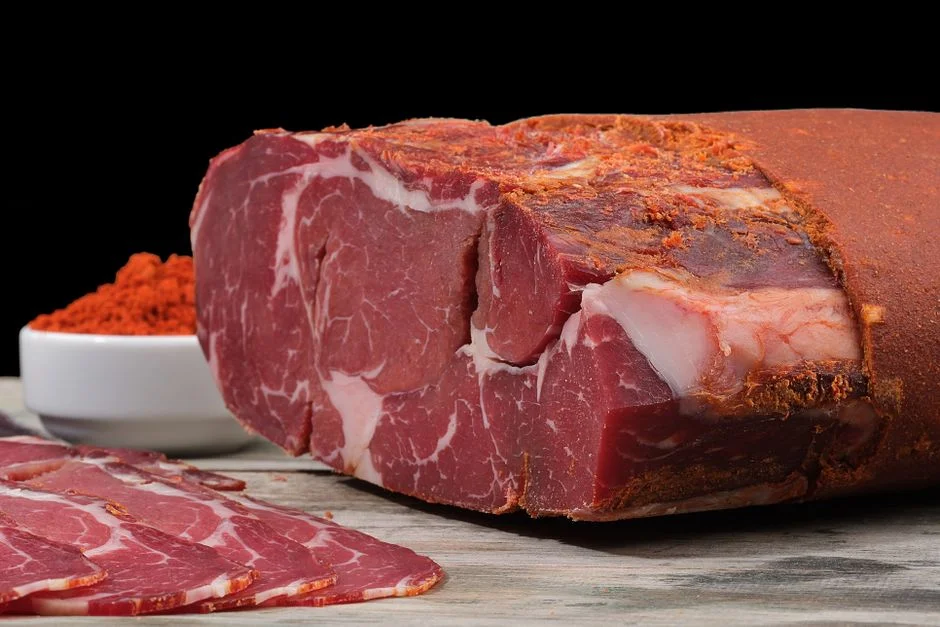
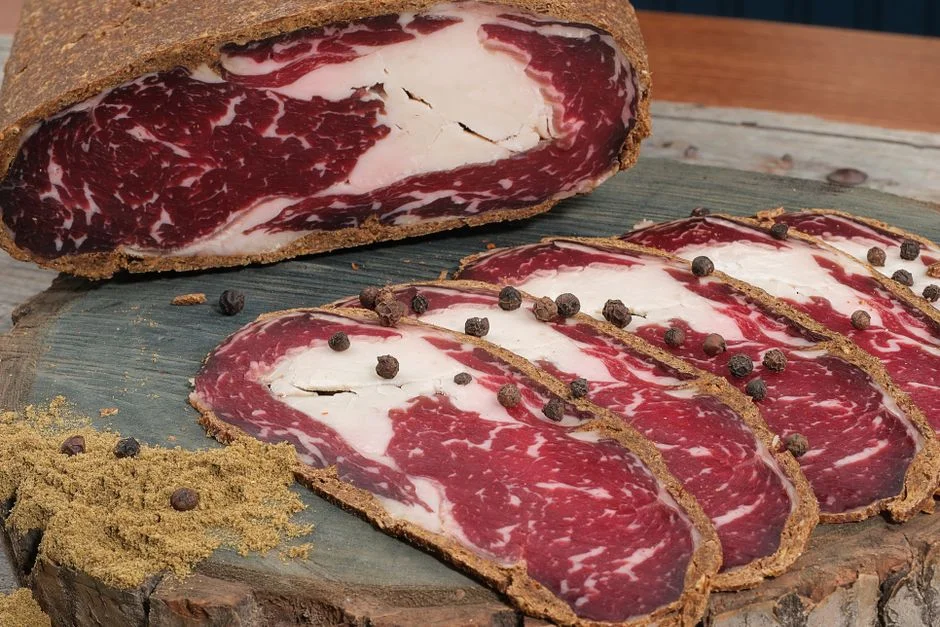
Not all commercially available biltong in the North American market represents the traditional product. Many domestic producers treat biltong as a jerky variant , heat-assisted drying, finer spice grind, reduced vinegar presence , and the result tastes categorically different from correctly made product. When evaluating commercial biltong, the indicators of quality are: visible coarse spice on the exterior, a slight vinegar tang in the aroma, and a moist interior on thicker pieces that has dried to a firm but not brittle texture.
Grass-fed sourcing is a meaningful signal in this category. The flavor of the beef is not masked by the curing process , it remains present in the finished product , so beef quality translates directly to product quality in a way that heavily seasoned products do not.
Matching Product to Use Case
A recipe guide and a spice blend are complementary tools for home production. Ready-made biltong serves either as a reference product or a convenient alternative for buyers who decide the DIY process doesn’t suit their time constraints. A variety pack serves the buyer still deciding what they prefer.
Most committed home curers will find themselves building toward a combination of a dedicated recipe resource, a spice blend for early batches, and occasional ready-made product for quality comparison. The economics of home production improve with each successive batch , the per-unit cost of home-cured biltong drops significantly after the initial supply investment.
Frequently Asked Questions
What is the difference between biltong and beef jerky?
Biltong is cured in vinegar and air-dried at ambient temperature without heat. Jerky is typically heat-dehydrated, often with added liquid smoke or sauce-based marinades. The result is a fundamentally different texture , biltong retains more interior moisture and has a distinct tang from the vinegar cure , and a different spice profile, with coriander as the dominant note rather than soy or Worcestershire-based seasonings. The two products are related in concept but not in method or flavor.
Is it safe to make biltong at home without a dehydrator?
Traditional biltong does not use a dehydrator , the process is intentionally ambient air-drying. Safety depends on the salt concentration, the vinegar marinade, and adequate airflow during drying to prevent surface mold. The standard guidance from established curing resources calls for coarse salt at a specific percentage of meat weight; consulting a dedicated guide such as Make Your Own Biltong and Droewors for precise ratios is strongly recommended over improvised measurements.
Should I start with a spice blend or mix my own seasonings?
Owner consensus on r/meatcuring and r/charcuterie consistently favors starting with a pre-formulated blend for the first few batches. The BiltongMate Biltong Spice Mix (Traditional) 14oz eliminates ratio guesswork and lets early batches focus on process control , drying environment, airflow, meat thickness. Once the process is repeatable, transitioning to individual spices allows customization that a fixed blend cannot provide.
How does commercial biltong compare to homemade?
Commercial biltong varies considerably by producer. Grass-fed options like Brooklyn Biltong Beef Jerky Snack Packs (Variety Pack, 2 oz, Pack of 5) are among the more authentic domestic offerings, with verified buyers noting a coriander-forward profile and vinegar tang closer to the traditional South African product than many competitors. Homemade biltong, once the method is established, typically offers greater control over thickness, spice intensity, and moisture level than any commercial product can provide.
What cut of beef works best for biltong?
The r/meatcuring and r/charcuterie community consensus points to silverside and topside as the standard starting cuts , lean, consistent grain, appropriate for slicing into the thick strips that biltong requires. Eye of round is a common alternative. Fatty or heavily marbled cuts are generally avoided because surface fat can go rancid during the extended air-drying period. The cut should be trimmed of sinew and sliced with the grain, which produces the characteristic fibrous texture that distinguishes correctly made biltong.
Where to Buy
Make Your Own Biltong and DroeworsSee Make Your Own Biltong and Droewors on Amazon